
Opening Analysis on Scream (1996)
- zrqai06
- Apr 20, 2024
- 8 min read

Scream, an enduringly popular horror and slasher film directed by Wes Craven, has arguably one of the best film openings in the media industry. Personally, I love the horror genre and for me, this opening scene achieved exactly what it was meant to, to hook the audience right from the first shot. In my opinion, achieving this in the crucial first few minutes contributed a lot to the film's popularity in whole.
The film starts with title slashing across the screen, with the usage of parallel sound as we can hear a woman screaming right when the letters of the screen spell "SCREAM". This usage of sound at the moment is a non-diegetic one.

The film goes on to start with a hand reaching for a phone, with the phone aligned right in the middle of the screen, indicating the importance the phone call might hold later on. The first call is brief as Casey (played by Drew Barrymore) hangs up the phone thinking, just like the viewers, that it's a prank call. After hanging up again on the second call, we get the first and only establishing shot of the house with a swing in view that's slowly moving, suggesting perhaps the killer yet to be revealed had just been here. In this same shot, it is noticeable that only one house has been shown which portrays the fact that this house is located somewhere far away and also justifies the dialogue later on "in the middle of nowhere". The perfect destination for a horror film.

Moving forward, the supposed protagonist, upon receiving another phone call, starts conversing this time and the mood gets a little light-hearted as discussion carries on. Tracking shot has then been used moving the audience along with Casey around the house as she's on the phone. She can then be seeing subconsciously locking a door, which might suggest she does suspect something suspicious even though it has not arisen yet.

The anonymous caller keeps on asking questions, getting information out of her, which leaves the audience with more questions as to why this is taking place. Then, the caller asks Casey for her name which leads to the dialogue that gets both the character and the viewer at the edge of their seats. "Because I want to know who I'm looking at." Right after this dialogue is delivered, eerie, non-diegetic music starts playing softly in the background. Along with this, we can also hear the diegetic sound effects of a dog barking outside right at the moment of this dialogue delivery. These usages of sounds have been put to indicate something mysterious or even creepy is afoot. Also, upon this dialogue, the mid-shot starts becoming a close up, to give attention to the expression on the character's face indicating uneasiness and fright.
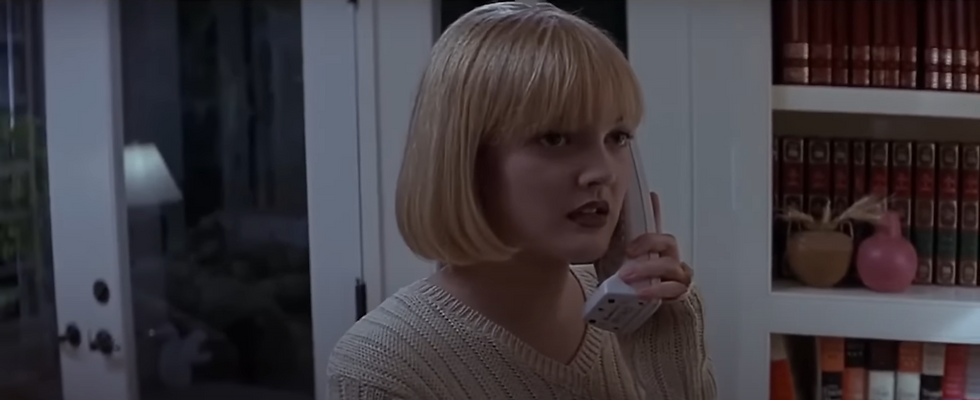
After this shot, we can see the different camera angles progressing and changing at a faster rate, which again signifies something is about to happen. The focus then shifts from Casey to the popcorn she was making for a couple of seconds. Again, the diegetic 'pop' sounds add more suspense to the overall scene.

The atmosphere gets even more intense after an additional two phone calls and when the mysterious called, now can be guessed as the killer, break into anger and shouts not to hang up. Now again, the shot progress into a close-up to make the audience focus on the facial expressions of Casey. Then, as soon as the killer calls her 'blondie' in an immensely creepy way, she starts running, the director keeping the audience with her, with the usage of tracking shot, as she begins locking doors in a state of panic and terror. We can see the lighting also becomes low-key adding more to the sense of fear. As soon as the character starts running in terror, non-diegetic fast-paced music starts playing with sound effects resembling a lot like gunshots.

The loud, fast music comes to an abrupt stop as soon as she locks the front door and starts looking outside. The silence helps to add an uneasiness factor for the viewers as they are in constant wait for the big thing to unfold. As the scene gets more tense, the camera again progresses to a close-up shot showing the character crying and terror to be seen clearly on the face. After hanging up the call, the diegetic sound of doorbell sounding sends Casey into pure panic. Doorbell, being a staple product of many horror films, is usually what excites the viewers and what petrifies the characters. Slow, non-diegetic boom sounds continue to sound throughout the progressing scene, which creates a further sense of tension. Camera moving to close-up of Casey crying and shouting heightens the seriousness of the situation.
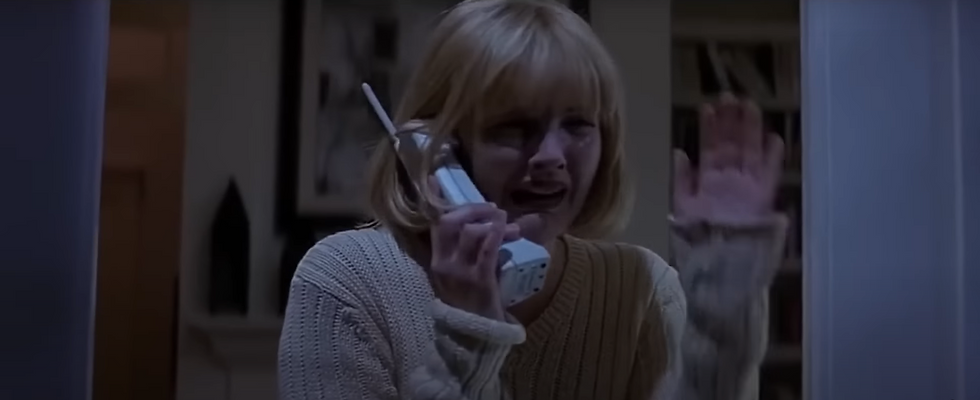

Another addition to the horror element moving forward would be when the caller asks her to switch off the lights. This dark environment is the typical start for the revelation of the killer in many horror films. This makes sense as up till now there hasn't been a trace of the killer, which makes this kind of a long-term suspense and really, the anticipation makes it more terrifying. The 'game' the caller and Casey go on to play, in order for her to save her boyfriend, provides close-up shots at many different angles from which growing fright of the character can be seen. The low-key lighting also makes the mood all the more serious.

Upon the asking of a question, when Casey denies, the caller goes on to say, "We can't stop now." Foreshadowing has been used here from the using of the word "we" as later on it is revealed that there is not one, but two killers. After that, she gets a question wrong, which results in the murder of her boyfriend. A diegetic sound of a knife slashing is heard and in that time the screen goes mostly dark, and when it is visible again, we can see the boyfriend on screen is not in the middle, but instead somewhere visible on the left-ish side. This perhaps indicates that he was not an important character of the film and probably his death will be forgotten pretty soon. Along with this, we can hear non-diegetic suspenseful music which radiates dread.

Moving on, the caller then asks the 'final' question asking which door he is at. Which again is foreshadowing and can be seen as a trick question, as probably the killers are standing at one door each, and its ultimate death for Casey no matter how she answers the question. The scene progresses to when a chair is thrown at the glass door with a loud shattering of glass. This is shot from a high angle which portrays that Casey is helpless in this situation and can't win this game.

A tracking shot taking us to the kitchen, the burning of popcorn and the smoke checks another box of the types of horror enticing environments.

Finally, we get the first glimpse of the killer from the eyes of Casey. The killer is seen running across the hallway, dressed all in black with an object resembling a knife in the hand. Loud enticing, again non-diegetic, music plays which makes the anticipation all the more terrifying. Casey takes a knife to defend herself, and the sound effect of her pulling out the knife can be seen as the same one used in the film later on.
Casey, then goes outside and sees her parents' car arriving from a distance, which might have given her and even the audience a sense of hope, but hope is usually pretty unrealistic when it comes to horror movies. This progresses to one of the most effective jump scares of horror movies when she looks through the window and for the first time, we get a close-up shot of Ghostface (the killer). This one shot is enough to indicate that this character is of the utmost importance and probably of the utmost power as well.

The diegetic scream from Casey along with this horror inducing visual is truly a really terrifying sight on its own, even without all the anticipation from beforehand. The entire opening scene climaxes at this particular point, the jump scare, and then later when Casey starts running towards her parents' house. The 'so close yet so far' phrase here comes into play when she is nearly a couple steps away from her parents' house, just as she is stabbed right in the chest. Any non-diegetic sounds from beforehand come to an abrupt stop and all we can hear is silence mixed with deep, last breaths from Casey. The high angle shots from the killer's point of view and low angle shots from Casey's makes the viewers entirely empathize with Casey and in the situation she's in.
Upon seeing her parents, she tries screaming for help and doesn't succeed as there isn't any voice left in her. Lying on the ground, moments before her death, she takes off the killer's mask and the screen goes black with all that can be seen is the knife with her blood on it.
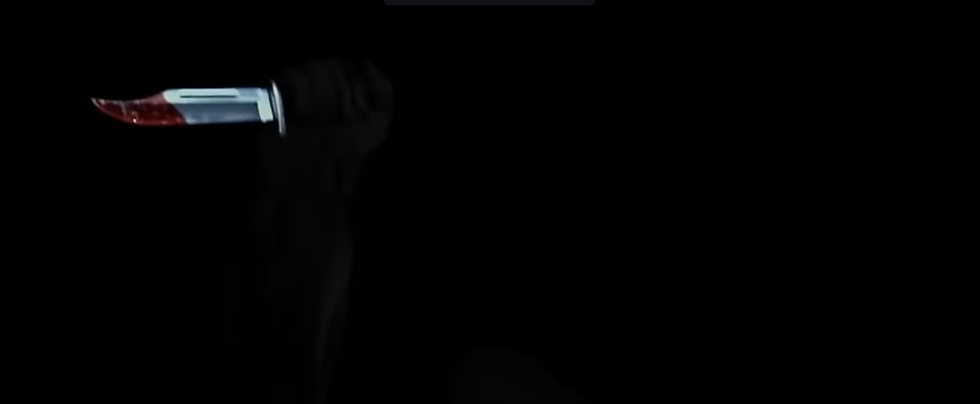
This perhaps shows the killer for now remains true to the name "Ghostface" and isn't yet detectable because it has a lot more to do ahead into the film. After she is stabbed to death, the screen turns black and cuts to her parents inside the house looking for her. It's already clear to these characters that something has happened due to the condition of the house, with the smoke and shattered glass. The parents moving throughout the house in panic, taking us with them with a tracking shot, along with suspenseful non-diegetic music is what indicates the opening scene is coming to an end. The shot then cuts to black, cutting to the killer dragging Casey with the phone still in her hand and on the line where the parents can hear the last sounds coming out of her. The over the shoulder shot of Casey's mom shows the intensity and seriousness of the situation and again is put there to make viewers sympathize with this family.
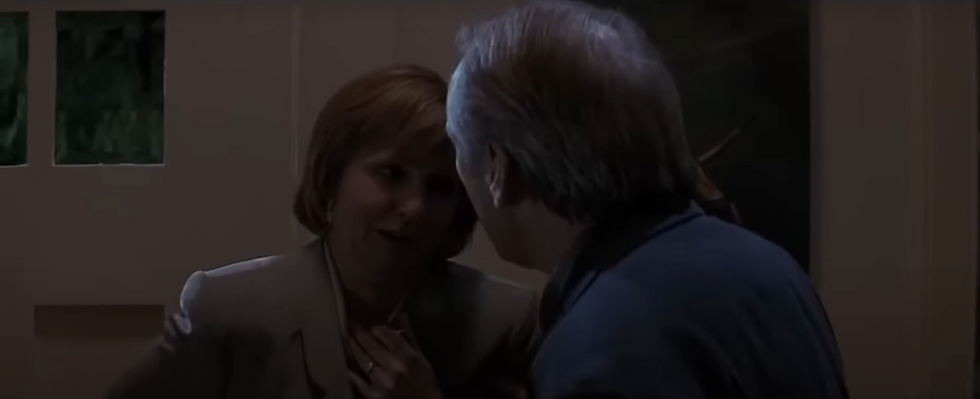
As soon the mother steps out the door, we hear a (this time diegetic) bone-chilling scream, which gets the viewers on their edge in anticipation and what leads the father to go outside.
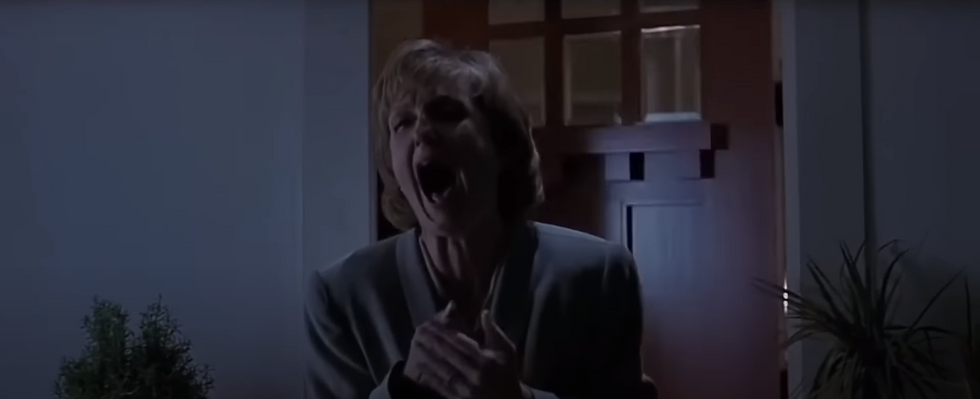
In this shot, the character is right in the middle of the frame, giving her all the focus, plus the close-up goes on to show the proper horror and terror she is experiencing at the moment. The low-key lighting also indicates the darkness (literally and figuratively) of the situation at hand. The father then goes out to check as well and the scene cuts to this horrific shot of Casey being hung by a tree.
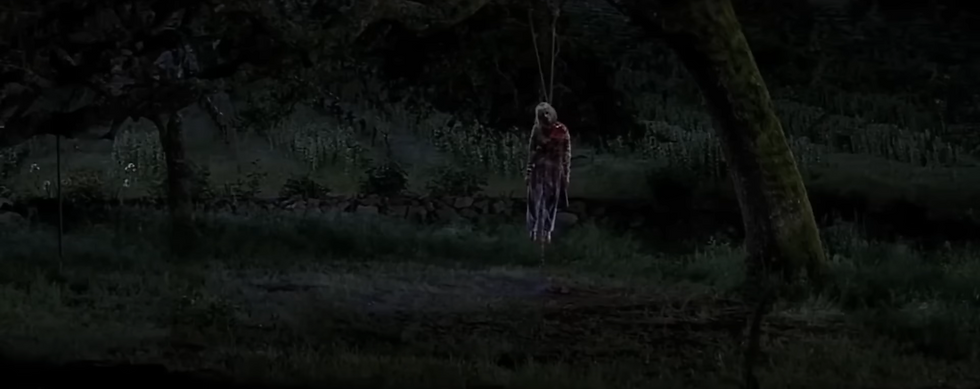
Then, as if the audience becomes the character of her dad, a handheld shot is used with a shaky hand, gets us to feel how the dad would've felt approaching his daughter in this state. In this wide shot, Casey is just a small, helpless figure, maybe portraying there was no way she could've helped herself. The opening scene then ends with a close-up of her dead face along with the use of a white flash which really contradicts with the lighting of the scene, making her close-up look all the more terrifying.

The opening to Scream (1996) succeeded in all aspects to make an opening scene an incredible and memorable one. It checked all the boxes and made sure no one watching would get bored and instead would have many questions right from the very beginning and would sit tight and watch them all unfold and make sense. This opening scene contains just the right amount of suspense, not too little, not too much. It's also pretty unique from a lot of horror films as everything is believable (which makes it more frightening) and also there is more anticipation than there is action. Also, the supposed protagonist, Casey, turns out not to be one as she is killed right in the first few minutes of the film.



Comments