
9 Frame Analysis
- zrqai06
- Apr 20, 2024
- 5 min read
Updated: May 4, 2025
The opening scene of The Dark Knight immediately throws us into a world that feels both familiar and broken. Even though it’s technically a superhero movie, the vibe is way more like a crime thriller, and that’s what makes it so different. In just a few minutes, we’re introduced to Gotham’s corruption, the Joker’s twisted logic, and a whole theme of chaos versus control, all without seeing Batman once. What’s crazy is how much is being said visually, through camera work, sound, and editing. Every frame builds tension, slowly revealing that this film isn’t about clear cut good vs evil, but about what happens when systems fail and someone like the Joker knows exactly how to use that. In this analysis, I’m breaking down nine key frames that show how Nolan sets the tone, builds suspense, and introduces the Joker not just as a villain, but as a force of total disruption.
Frame 1:

The film opens with this massive aerial shot of Gotham City. It's clean, industrial, and modern, full of towering skyscrapers and blue skies. At first glance, everything seems calm and well-structured. But then suddenly, one window in a tall building just explodes. It's jarring and almost silent until that moment. That transition, from peace to chaos, immediately sets the tone. It tells us this isn’t your typical superhero movie. Nolan’s using this long, controlled establishing shot to give us a false sense of security before ripping it apart, introducing this idea that underneath Gotham’s order, there’s a brewing threat. The use of high-angle framing makes the city feel detached, like we’re watching from above, maybe even judging it. The explosion kicks off the tension, almost like a warning: everything’s about to unravel.
Frame 2:

Next, we cut to a close-up of a man holding a clown mask. We don’t see his face, just the back of his head and the mask. Straight away, it creates this mystery. Who is he? Why the clown? The clown mask is such a powerful prop, it’s unsettling, colourful but creepy, which sets the tone for the Joker’s twisted personality even before we know it’s him. There’s no dialogue here either, which keeps the suspense high. The camera movement is really smooth, following the guy from behind as he walks toward a car. It makes us feel like we’re tagging along, almost complicit. The mise en scene is really controlled too with business suits, clean streets, a very organised world, which makes the mask stand out even more. It tells us that chaos is about to enter a very structured environment.
Frame 3:

Then we get a wide rooftop shot of two more masked men ziplining between buildings. It’s high-stakes, kind of cinematic in a flashy way. This is where the “heist film” energy really kicks in. The camera tracks their movement in a wide shot, giving us a sense of space and danger. It’s exciting but also unnerving, these criminals are clearly skilled and organised, which makes them more dangerous. It’s not a messy robbery. It’s got a planning to it, like the whole thing is being staged for us. This frame also reinforces the idea that Nolan’s villains aren’t just criminals, they’re strategic, calculated performers. Even the height and scale of the setting makes it feel like Gotham isn’t just a city, it’s a playground for these anarchic forces.
Frame 4:

Inside the bank, things immediately spiral into chaos. The robbers burst in, shouting at everyone, waving guns, and taking control. The camera here goes handheld, shaky, and urgent, which totally contrasts the smooth rooftop shots. It visually represents how Gotham’s order is being destabilised from the inside. The mise en scene, the neat bank counters, well-dressed civilians, marble floors, all starts to fall apart as fear takes over. It’s also interesting how the editing gets quicker here, cutting between different angles and perspectives. It builds stress for the viewer, like we’re trapped inside with the hostages. The sound design is layered, shouting, background alarms, the clicking of guns, all mixed with Zimmer’s eerie score. It’s not just a robbery. It’s a breakdown of structure, and the Joker isn’t even fully revealed yet. That builds suspense perfectly.
Frame 5:

Midway through the heist, the robbers start turning on each other. One shoots another as soon as his part of the job is done. At first, it’s confusing, but then it hits you that this is part of the Joker’s plan. No one’s meant to survive except him. It’s a brilliant way of showing us his ideology before we’ve even met him. He doesn’t trust anyone, and he controls through fear and manipulation. The editing becomes sharp and abrupt, with each gunshot feeling isolated, forcing us to sit with each betrayal. It’s tense and dark, and also kind of ironic. These men think they’re working together, but they’re just pawns. It reflects the Joker’s belief in chaos and the idea that systems, even criminal ones, can’t be trusted. It’s like he’s already tearing apart Gotham’s underworld from within.
Frame 6:

Then there’s this moment where the bank manager, who’s been lying injured on the floor, suddenly pulls out a shotgun and starts firing at the robbers. It’s unexpected and shifts the power dynamic. For a second, it’s like order is fighting back, but not really. He yells, “Do you know who you’re stealing from?!” and that changes everything. It tells us this isn’t just any bank, it’s mob controlled. So even the institutions we’re supposed to trust are corrupt. Nolan’s showing us that Gotham’s problems go deeper than just masked criminals. The low angle shot of the manager makes him look dominant for a second, but he’s quickly taken down. It’s like a visual metaphor for Gotham’s failing resistance, trying to fight back, but already outgunned.
Frame 7:

Finally, we get the reveal, one of the last remaining robbers takes off his clown mask and it’s the Joker. The whole time he’s been there, hiding in plain sight. The camera focuses on his face, the messy makeup, greasy hair and dead eyes. He looks like he doesn’t care about anything, which is terrifying. The moment he says, “What doesn’t kill you, simply makes you stranger,” everything clicks. It’s such a twisted line, and he says it with this weird, almost amused tone. The close-up makes it intimate, like we’re finally face to face with the chaos we’ve been watching unfold. This isn’t just a villain introduction, it’s a character manifesto. He isn’t motivated by greed or revenge. He just wants to watch systems collapse. That’s way scarier.
Frame 8:

The Joker escapes by driving a school bus straight through the wall of the bank and blending into traffic with a line of other school buses. It’s genius and kind of horrifying. The school bus, usually a symbol of innocence, is now a getaway vehicle. It visually represents how the Joker corrupts normality. The camera pulls back and tracks the bus, almost showing how easily he disappears into the crowd. No one suspects a thing. This moment is actually a bigger critique of Gotham than it seems. It shows how blind the system is, how someone this dangerous can literally escape in broad daylight. It reinforces that the Joker thrives by turning structure against itself.
Frame 9:
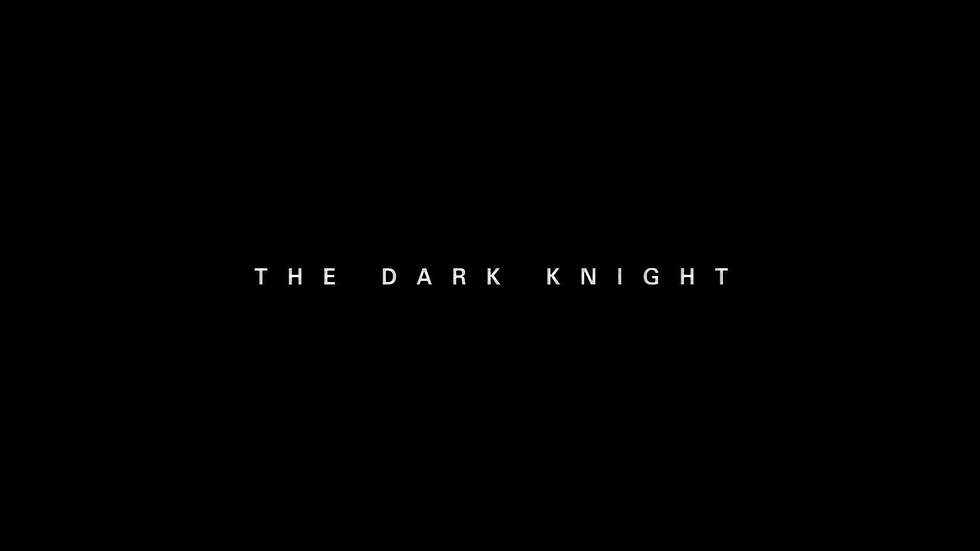
After the Joker vanishes, the screen cuts to black and the Dark Knight title appears. The music rises, and it’s the first time we breathe, kind of. What’s wild is that the film hasn’t even introduced Batman yet, and already it’s full of tension, corruption, betrayal, and chaos. This title card isn’t just a break, it’s a shift. It tells us: this is the present now. Gotham is broken, and it’s going to take more than just a hero in a suit to fix it. Thematically, it’s the perfect way to launch the film. It’s not about good vs evil, it’s about chaos vs control, and whether a city like Gotham can survive when someone like the Joker exists.


Comments